
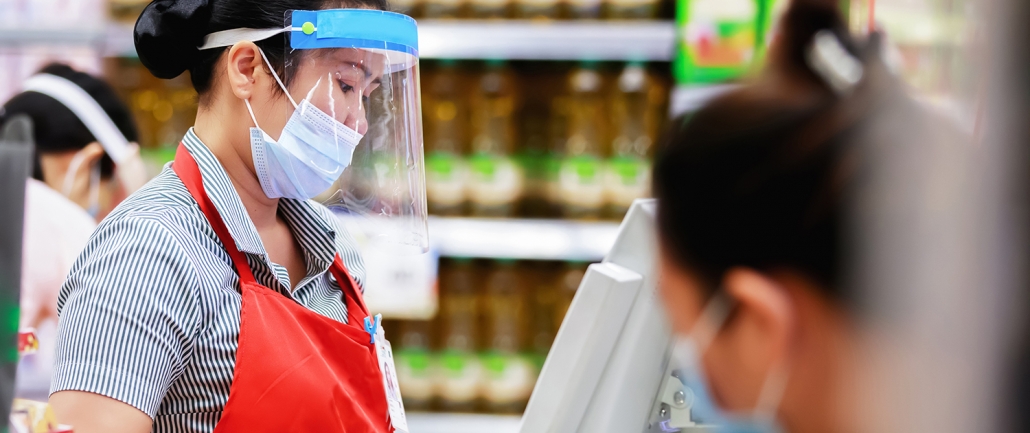
Essential Workers Risk their Lives and We Benefit. What Can We Do in Return?
COVID-19 has made it clear that many of our cities have built their communities along the same racial and economic divide that has disadvantaged communities of color for centuries. And yet, these same communities of color house our essential workers. There live our grocers, truck drivers, custodians, meat packers, and other unsung heroes. They are risking their lives, and their families’ lives, when they enter their work place every day.
Those who benefit must consider this question: Do our essential workers have the resources they need to cope with the disproportionate impact COVID-19 is having on their communities? Do we care enough?
The answer to both questions, unfortunately, is no.
In San Diego, the communities in the South region – where 78% of the county’s minority residents live — have the highest rates of infection. Health officials are seeing similar trends in cities like New York, Chicago, Milwaukee, and Los Angeles. It is clear that the virus is disproportionately affecting black Americans, Latinx, and Native Americans in the US.
These statistics are a reflection of society’s inherently racist infrastructure. The infection rates highlight the inequities that these communities face nationwide. And as COVID-19 spreads, our nation’s health disparities are simultaneously exposed and worsened.
Officials all over the country are demanding that testing sites be placed in infection hot spots. And while getting more testing nationwide is crucial to reducing our COVID-19 numbers, the reality is that our communities of color are more susceptible to the virus because of the environmental conditions they live in.
Public health officials directly correlate physical health with many environmental factors. Neighborhoods riddled with poor air quality, broken or missing sidewalks, no safe green spaces, and a lack of grocery stores make residents susceptible to poor health. Additionally, the combination of low living wages and poor access to health care or healthcare services contributes to the likelihood of a person deciding to skip a doctor’s visit – and its co-payment – to buy food for the week.
These social and environmental circumstances are the reason why chronic conditions such as diabetes, heart disease, and advanced stages of cancer are much more rampant in communities of color. Further, all of these conditions make a virus like COVID-19 far deadlier. And yet, we continue to ask our essential workers living in underserved communities to show up to work every day despite the augmented risk. Because without them, our society crumbles.
The truth of the matter is that our essential workers are living in places where their zip code has a greater impact on their lives than their genetic code. And this needs to change. These communities are the backbone of our country. They are our essential communities.
Where do we go from here? What can we do to help the essential workers who risk their lives every day for our benefit? We can support the change that’s underway. Counties all over the nation accelerate their funding to programs that provide bilingual assistance to all those navigating the county’s system for relief resources. We can demand the same from our elected officials. We can demand that more resources flow to disadvantaged neighborhoods, not just during this time of crisis. We need to take advantage of this momentum and ensure these programs continue on, even after COVID-19.
Programs like these are the foundation needed to keep working families sheltered, fed, and connected. They help ensure our essential workers and their communities stay healthy enough to protect us.
We owe them that much.
Author:
Breny Aceituno
Prevention Specialist, IPS
Breny Aceituno is a Prevention Specialist for Partnerships for Success, a program that aims to disarm the health disparities present in Latino communities living near the San Diego border. Breny graduated from UCLA with a bachelor’s in Political Science. She earned a master’s degree in Conflict Management from the University of Haifa in Israel. Breny considers herself a life-long learner who is driven by the actionable accountable measures that can improve our communities.


