
5 Questions that Incorporate Racial Equity into Public Policy – Part 2
As seen on GovLoop.
Policymakers must consider racial equity implications during the enforcement phase as well as the development phase of a policy. This requires an understanding of how different populations will specifically be affected when it is enforced. For instance, will its enforcement result in further harm to Black, Latinx/Hispanic, Native American, Asian and Pacific Islander people or other minority groups?
Many policies are directed toward populations that may not have equal access to social determinants of health. These are the conditions that define a person’s quality of life, from the type of physical environment they live in to the education they receive and the socioeconomic factors that contribute to their overall health. Minority groups especially may find themselves unjustly penalized because they do not have the same opportunities for a higher quality life.
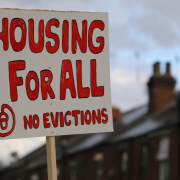
For instance, this has important significance for minority groups since more non-white people are homeless per capita than white people. Laws that prohibit loitering or sleeping in a public space may not have much impact on some. But if policies do not address the underlying issues such as the housing crisis, unemployment, mental health and substance abuse that may lead to homelessness in the first place, we miss out on an opportunity to intervene in improving the well-being of those living on the streets.
In the case of homelessness, enforcing a no-loitering policy should also come with a remedy for mitigating the reason someone is unsheltered.
When considering racial equity in the enforcement of a policy, it helps for decision-makers to consider the following questions:
1) Are resources in place to equitably enforce the policy?
Funding for staff and infrastructure must be equitably accessible to all populations. Here, it is necessary to distinguish between “equality” and “equity.” Equality is when everybody receives the same amount of resources. Equity is when everybody receives the resources specific to their circumstances to achieve the same opportunity.
In this situation, staffing and infrastructure must be determined based on the individual community’s needs that the policy serves, recognizing that each community has different levels of resources.
2) Are sanctions or punishments levied equitably (not equally!) across populations?
If an individual who is low-income, for instance, is given the choice between paying a fine or going to jail, their decision may come down to putting food on the table for their family or missing work while detained. It is easier for higher-income individuals to pay the fine, whereas lower-income individuals may wrestle with the two options, neither of which promote mental well-being. How will the policy further undermine the well-being of vulnerable populations?
3) Is the community aware of the policy and how it will be enforced?
Community awareness of a policy ensures that there is a clear understanding of its objectives and impacts. It establishes expectations and the accountability of enforcers for equitable enforcement. It also helps achieve buy-in and support from the community.
4) Who will be harmed if the policy is not enforced equitably?
Failure to enforce regulations equitably across all populations means that some communities will remain disadvantaged.
For example, environmental laws put a cap on the amount of pollutants that can be released into the air. However, often due to a lack of enforcement of these laws, people who live close to factories and industrial areas experience higher rates of respiratory problems and other negative health outcomes. Not surprisingly, low income minority groups are often the ones that live close to polluters. High income white people, on the other hand, live farther away and therefore have fewer health problems.
5) Is the policy flexible enough to allow for changes if data and evaluation show that enforcement is ineffective?
Data is key in determining if enforcement is working or if it produces inequitable conditions. Policies may include evaluation metrics that trigger a shift or halt to implementation and enforcement.
Rather than scrapping an ineffective policy altogether, small tweaks may produce a much more desirable (and economically efficient) outcome based on changing conditions. Metrics should take into account population-specific outcomes.
Equitable enforcement of policies results in healthier communities. When policies are equitably enforced, minority groups are given the same opportunities as white people to achieve optimal health, creating more fairness in the distribution of resources.
Author:
Meredith Gibson
Media Director, IPS
Meredith Gibson is the Media Director for the Binge and Underage Drinking Initiative, Countywide Media Advocacy Project, and Partnerships for Success. She generates news articles to promote awareness of public health issues, collaborates on opinion editorials (op-eds) with community leaders, and pitches ideas and spokespersons to news outlets, amassing media coverage at the local and national levels.