

Extreme Heat Is a Public Health Emergency, And It’s Hitting Some Communities Harder
March didn’t just feel unusually hot; it marked a stark escalation in extreme heat that communities across the country could not ignore. Communities across the country experienced record-breaking temperatures, with some climatologists declaring this most recent heat wave as one of the most significant weather events this century. Emergency departments are equally on alert for upticks in ED visits during heat waves, especially among socioeconomically vulnerable populations, such as low-income and racial and ethnic minorities.
While politicians and scientists debate whether climate change causes extreme heat, climate specialists and public health nonetheless view it as a critical emergency. This was a recurring theme at the National Academy of Medicine’s (NAM) Climate and Health Summit, held in Washington, D.C., on April 8th. Leaders in public health, healthcare, climate science, business, finance, technology, and community resiliency convened to examine the intersection of climate and health, and envision what they should mean for both the population and the planet. According to María Neira of the World Health Organization, addressing the climate crisis represents one of the most significant public health opportunities of our time.
The topic is of such vital concern that the American Public Health Association (APHA) and several other organizations filed a lawsuit against the EPA over its rule overturning protections from air pollutants, including eliminating all carbon emissions from vehicles. To counter EPA’s actions, Georges C. Benjamin, M.D., CEO of APHA argues
, “Ignoring the scientific evidence of the threat climate pollution poses to the health of all of us sends a very wrong message to communities across the nation and around the world. EPA has a duty to consider the well-being and safety of all, and the science is clear; climate change and air pollution threaten everyone’s health.”
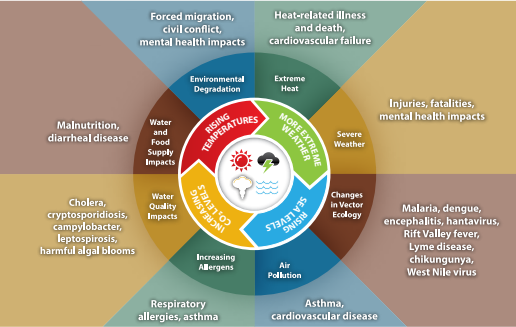
Dr. Benjamin is correct that climate change threatens everyone’s health; just some more than others. From a physical health standpoint, extreme heat can exacerbate underlying health issues such as cardiovascular disease, respiratory illness, and diabetes, and Black/African Americans are more likely to suffer from all three compared to all U.S. adults. This increases the risk of heat-related illnesses, including heat exhaustion and heat stroke, which can lead to severe complications or death if untreated.
Workers in agriculture, construction, and other outdoor jobs are on the frontlines of extreme heat and climate change. The Union of Concerned Scientists report they are more likely to experience heat-related illnesses and deaths, are more likely to be Black/African American or Hispanic/Latino, and depending on the industry, paid less than the U.S. workforce as a whole. Moreover, if we fail to reign in heat-trapping emissions, many of these workers will see a 10% reduction annually on their earnings – a percentage that will have a significant impact on populations already experiencing economic hardship, a key social determinant of health. This in turn could translate to lower income and sales tax revenue, with the broader community facing a reduction or entire elimination of public services.
At the Institute for Public Strategies, we see these impacts firsthand in the communities we partner with, where access to safe outdoor spaces, shade, and cooling resources directly shapes health outcomes. Addressing extreme heat requires more than individual behavior change; it demands policy, systems, and environmental solutions that reshape the conditions in which people live and work.
This upstream approach focuses on prevention by shaping healthier conditions through non-medical or healthcare interventions, such as expanding affordable housing that keeps people from being exposed to environmental hazards and instability; strengthening air quality standards and emissions regulations, not doing away with them; or developing workforce pipelines that break the cycle of poverty, a key driver of poor health outcomes.
If the health impacts aren’t enough to convince people of the pressing need to address climate change, then consider the economic benefits. Research from the World Resources Institute shows that spending money on climate adaptation and resilience can yield significant returns of up to $10 for every $1 spent. The report found that in the health sector alone, investments are projected to deliver returns of over 78% in the form of lives protected or saved from climate-related illnesses like heat stress, malaria and dengue fever.
Solutions call for collaboration across sectors, including science, health, technology, and business, as well as coordinated action at all levels of government. We must stop throwing around the phrase “working in silos” and actively work to break down the barriers that prevent cross-collaborative innovations from ever materializing. This means investing in heat-resilient infrastructure, protecting outdoor workers, and expanding access to cooling resources, because coordinated, cross-sector action is no longer optional, but essential to protecting community health. And for low income and communities of color, not only is it essential, but life-saving.


