
IPS’ YCA Program Connects Youth to Nature
Creating meaningful opportunities for young people to connect with nature is about more than recreation; it’s a powerful strategy for prevention. Through the Youth Community Access (YCA) Program, IPS is removing barriers to outdoor access and helping youth build confidence, connection, and a sense of belonging.
This impact has been recognized at a broader level, with IPS recently being named Community-Based Organization of the Year by the San Diego County Office of Education, reflecting the program’s innovative, youth-centered approach and its role in strengthening well-being and preventing substance misuse.
At the heart of this work is Program Manager Dane Bolding, who brings firsthand experience working alongside youth in outdoor settings. We asked Dane to share more about the program and what he’s seeing on the ground.
Q: Can you tell us what the Youth Community Access Program is and how creating outdoor access opportunities specifically for young people is tied to preventing substance use?
A: The Youth Community Access (YCA) Grant Program, under the California Department of Natural Resources, supports youth access to natural or cultural resources with a focus on low-income and disadvantaged communities. The program is funded by the Youth, Education, Prevention, Early Intervention and Treatment Account (YEPEITA), created by Proposition 64 (the Adult Use of Marijuana Act).
Access to the outdoors can prevent substance misuse through an upstream approach. When youth are given access to the outdoors, they are given more than a chance to have fun outside. For one, they learn about the open spaces around them and the recreational opportunities they provide. They build peer connections in an out-of-school setting and learn from trusted adult allies, which boosts a sense of community connection and belonging. Too many barriers exist for youth to access the outdoors and safe third spaces, such as transportation, lack of knowledge, familial/community support, and economic challenges, etc. By overcoming these access barriers, youth who wouldn’t historically have had the opportunity to see and engage in these spaces are finally given that opportunity, which can be life-changing.
Q: You’ve seen firsthand how outdoor experiences can support youth well-being. What changes have you noticed in participants, whether in confidence, connection, or overall mental health?
A: Sometimes the changes can be subtle, and sometimes they can be overt. I’ve taken youth out on hikes that challenged them both physically and mentally, not because they were necessarily difficult hikes, but because they didn’t have the self-awareness or confidence in themselves at the start of the hike. However, anytime any youth has expressed that self-doubt, they don’t back down and they don’t quit. They end up seeing that they have more potential within themselves than they thought, and that sense of self-worth translates to how they approach other things in their lives, like relationships, career paths, and goal setting.
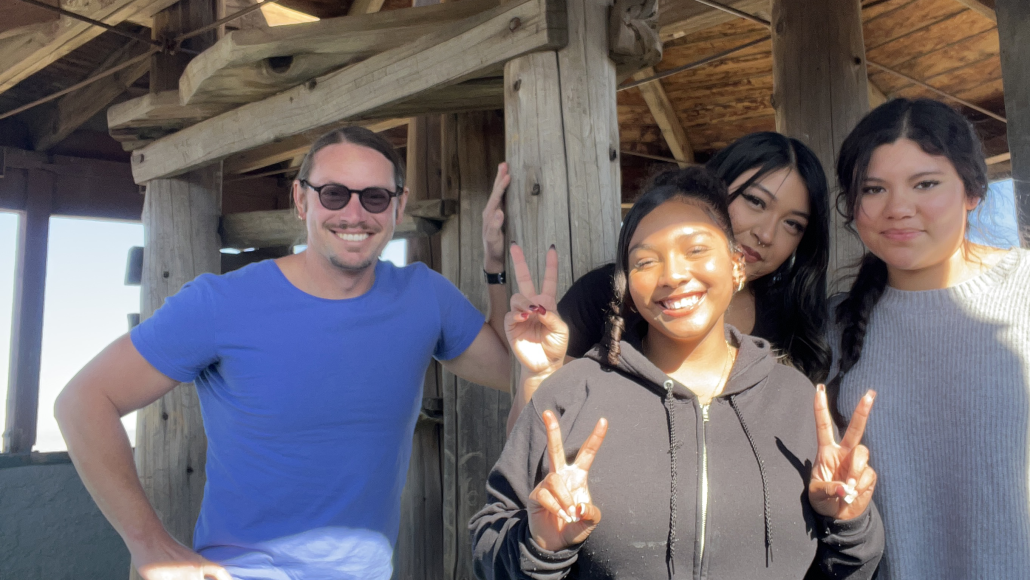
The best change I recognize is when I see a whole group of youth, some who might be friends, and some who might not ever socialize, are all together laughing, smiling, and having fun outdoors. Youth experience a lot of pressure as they grow into young adults and their identities are forming, so they often put up a protective barrier when in unfamiliar circumstances. So those smiles speak a thousand words because it shows they are comfortable and confident with themselves, their peers, the environment, and the activity.
Q: Your program was recently recognized with a leadership award from the San Diego County Office of Education — congratulations! What do you think makes your approach to engaging youth stand out?
A: I think a key difference is providing an array of different engagement opportunities in a variety of settings that allows youth the opportunity to safely challenge themselves and expand their own comfort zones. The way we find our own connection to nature is a very personal pathway. It’s not my goal to make anyone a professional surfer, or an environmental scientist, or an organic farmer, or anything like that. I just want to give youth the chance to see and try different things so they can make a connection they may never have had. It goes a long way when you approach the people and the work you do genuinely.
Q: For organizations that want to better engage youth but may not have outdoor programming experience, what lessons have you learned that they could start applying right away?
A: There are so many ways and so many resources out there that can help with providing programming and helping you figure out how you want to engage youth in the outdoors. Remember that we all have different connections to nature, so the way one person likes to get outside will be different from the next, and we need that diversity and inclusion to make the outdoors more accessible to all. Don’t think that you need to plan a five-day camping trip with a bunch of people to some remote park to have a “real outdoor experience.” There are many simpler activities that can be done right around where those you serve work, live, and play, and that can be more inviting and just as engaging. If you don’t know where to start, start by asking. Ask the youth you serve what interests them. Are there things they already like to do? Are there things they want to try? Are there things they are unsure of or hesitant about? Youth appreciate being heard if you are willing to listen.
By centering youth voice, removing barriers, and creating access to safe, supportive spaces, IPS continues to build community-driven solutions that strengthen well-being and prevent substance misuse, one experience at a time.
Follow Dane and his Programs to stay up to date on upcoming events and trips:
Instagram
Contact Dane Bolding or IPS:
Institute for Public Strategies
(619) 476-9100 ext. 121
dbolding@publicstrategies.org
Info@publicstrategies.org


