The Public Health Challenges – and the Hope – for 2026
The field of public health has always operated at the intersection of science, policy, and community engagement. While there have been varying definitions of “public health,” one consistent principle stands the test of time – ensuring everyone meets optimal health. Yet the road to achieving this aim is fractured with institutional potholes, political twists and turns, ideological forks in the road, and uphill battles. Recent events show how public health is often caught between evidence-based expertise and short-term political considerations.
With so much to consider, the PICture This editorial team asked what the biggest public health challenges of 2026 would be and, more importantly, how we would move forward. We looked no further for insight than our boots-on-the-ground colleagues – the ones who work tirelessly to promote healthier, safer, and more equitable communities where everyone should have a voice in decisions that affect our wellbeing. Here is some of what they said, in no particular order of importance or magnitude:
The spread of misinformation, including the information being released at the executive level…
The numbers back up misinformation as a leading cause of worry for public health professionals. Only 19% of Americans felt very confident in their ability to recognize fake news, and 67% feel that fake news causes a great deal of confusion. We don’t have to go too far back in the past for a worse case scenario resulting in misinformation-induced harm: the Covid-19 pandemic. Rather than listening to the experts, some skeptics turned to social media and other communication outlets and fell into the rabbit hole of misleading information. This led to vaccine avoidance, mask refusal, and taking medications with dubious claims of treatment. We can’t imagine how many deaths could have been avoided or whole communities not traumatized by useless and senseless advice.
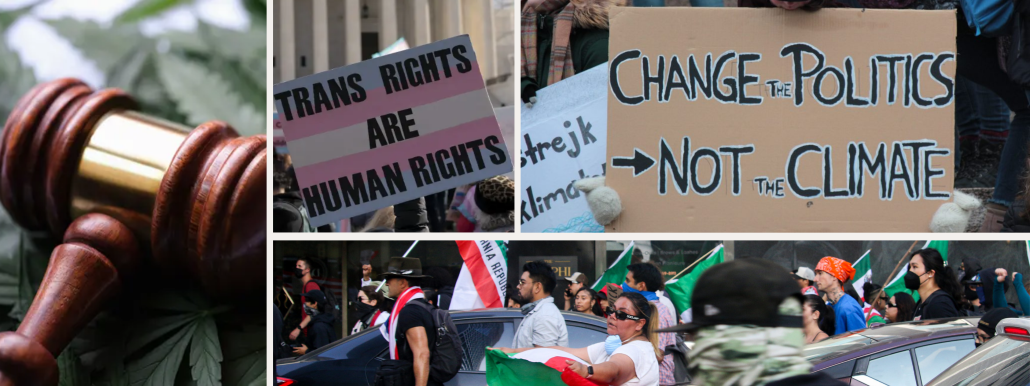
The reclassification of cannabis is likely to be perceived by many youth as an official signal that marijuana is “safer,” accelerating normalization and reducing perceived risk.
The recent executive order directed the federal government to move cannabis from a Schedule I to Schedule III drug, putting it in the same category as Tylenol with codeine and common medications that treat ADHD. Yet research and public health messaging consistently warn that cannabis use during adolescence can harm learning, memory and attention, and possibly even lead to a substance use disorder. With all this mixed messaging, it’s no wonder youth perception of cannabis risk is on the decline: It’s more fun to believe that cannabis can’t be that bad if adults say it isn’t. This action at the federal level rolls back decades of cannabis prevention work, especially with youth.
The political war on trans healthcare, especially for trans youth. As access to gender-affirming care is restricted, we need to rise up to support the trans community and help find alternative pathways to care.
The battle over transgender healthcare pits the medical community such as the American Medical Association, the American Academy of Pediatrics, and the American College of Physicians that recognize gender-affirming care as evidence-based, medically necessary treatment against the 20+ states enforcing bans on gender-affirming care for minors. The consequences are devastating: transgender youth face increased rates of depression, anxiety, and suicidality when denied access to care. Public health professionals must not only advocate for policy change but also work creatively to connect trans individuals with affirming providers, mental health support, and community resources. This means building networks across state lines, supporting telehealth options where legally permissible, and ensuring programs create explicitly welcoming spaces for transgender and gender-diverse people.
A volatile political climate is fracturing the community cohesion that public health depends on.
Just a few weeks ago, the federal government threw public health into chaos by defunding and then reinstating money toward substance use prevention, harm reduction, and treatment. Advocates from all over the country pressured the reversal of this decision. These actions demonstrate how rapidly policy can shift and how deeply these changes affect community trust and stability. It took less than 24 hours to create chaos for organizations serving people in crisis. Syringe service programs, overdose prevention sites, and medication-assisted treatment facilities suddenly faced potential closure, only to receive a last-minute reprieve. This whiplash governance makes long-term planning impossible and erodes the relationships that are fundamental to effective public health work.
ICE raids are creating fear that keeps people from accessing essential health services.
Recent escalations in immigration enforcement, including highly publicized ICE and Border Patrol operations in communities nationwide, have created a chilling effect on healthcare access. When people fear that seeking medical care, visiting a clinic, or even calling 911 might lead to deportation – either their own or a family member’s – they avoid the healthcare system entirely. This drives diseases underground, prevents early intervention, and creates conditions for outbreaks to spread unchecked. The public health implications extend beyond individual health outcomes. When significant portions of a community are afraid to engage with health services, we lose our ability to conduct surveillance, respond to outbreaks, and provide preventive care to everyone regardless of immigration status. Public health departments must work to establish themselves as safe spaces, clarify their non-involvement in immigration enforcement, and build trust through consistent, visible community presence.
Racism and structural inequities remain the persistent underlying condition…
While each challenge we’ve discussed deserves focused attention, none exists in isolation from the structural inequities that have always shaped who gets to be healthy in America. Black maternal mortality rates remain almost three times higher than white maternal mortality. Environmental racism concentrates pollution and toxic exposures in communities of color. The wealth gap, shaped by centuries of discriminatory policy from redlining to mass incarceration, determines access to healthy food, safe housing, quality education, and healthcare.
Moving Forward
Well-being starts with providing the basic essentials. This means we must advocate for policies that address housing, food security, education, economic opportunity and healthy neighborhoods, the social determinants that fundamentally shape health outcomes.
The challenges ahead are formidable, but as Dr. Lisa Cooper at Johns Hopkins quips, public health has always been about the long game. Our work requires persistence, creativity, and an unwavering commitment to the principle that everyone deserves the opportunity to be healthy. We must ground ourselves in evidence while building the community relationships and political will necessary for change. We must speak the truth about the policies harming health while offering tangible solutions. And we must take care of ourselves and each other, because this work is exhausting and we need our community of practice to sustain us.
The road ahead is indeed fractured with political twists and turns. But public health professionals have navigated difficult terrain before, and we’ll do it again, together.
Author:
Meredith Gibson
Media/GIS Director, IPS
Meredith Gibson is the Media/GIS Director at the Institute for Public Strategies. She uses geographic information systems (GIS) and media advocacy to promote systems and policy changes that contribute to healthy, safe, vibrant, and equitable communities.


