California’s New Composting Law Takes on Climate Change
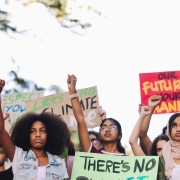
It’s no secret that the first to be impacted by the devastating effects of climate change are those who are already the most vulnerable. The startling and unprecedented changes to the natural world—caused, at least in part, by human activity—individuals that are already struggling are likely to bear the burden of environmental collapse. Already, researchers indicate that the impacts faced by these communities can be far more widespread and immediate than many might expect.
For example, an obvious impact of climate change is rising average temperatures; we feel it, summer after summer as the thermometer ticks ever upward. However, less expected are the secondary effects these changes might have—things like fewer opportunities for healthy outdoor time and worse mental health outcomes. These effects are exacerbated in communities where inequalities are most pronounced. For low-income communities where amenities like air-conditioning and insulation are fewer and further between, the effects of increased global warming will be felt most severely.
That’s why it is important to look for “upstream” solutions to environmental issues. By addressing the root causes of a problem rather than its symptoms we can prevent harm, such as increased global temperatures, as well as its trickle-down effects, like impacted mental and physical health.
In that vein, California has recently begun to implement SB 1383—dubbed “California’s Short-Lived Climate Pollutant Reduction Strategy”—in earnest. This legislation was introduced in 2016 by then-Governor Jerry Brown, and broadly sets goals for the reduction of methane emissions in the state.
Methane (CH4) is a leading contributor to atmospheric insulation, 25 times as potent a contributor as carbon dioxide (CO2). That ratio makes methane a major target for emission reductions, as pound-for-pound, methane accounts for much more atmospheric insulation—and thus, temperature increase—than do even pollutants from fossil fuels. That’s why bills like SB 1383 are working to reduce the amount of methane we release in California.
One way to reduce methane emissions is by lowering the amount of organic waste being decomposed in municipal landfills. This entails creating proper composting sites for the separation of food and yard waste and redirecting organic matter that would otherwise end up creating methane into more productive areas. One such redirection is the distribution of the created compost to local farms, parks, and gardens.
But what would this look like in practice?
We can look to state and local municipalities for examples of success in creating a buffer between vulnerable communities and climate effects. Often, these localities can address the specific needs of their community members more acutely than broad strokes approaches by other governing bodies.
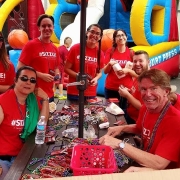
For example, in 2018 the Institute for Public Strategies (IPS) partnered with San Bernardino County residents who were advocating for the City of Pomona to allow them to use a vacant city-owned property to create Pomona’s first urban farming project. The project—titled ECOFARM—focuses on composting to support climate change mitigation and alleviate environmental justice burdens on the immediate community. The city could not deny the efforts of the residents and voted unanimously in favor to allow the use of the vacant lot for the ECOFARM free of cost. The ECOFARM was funded by a grant secured by residents from the California Environmental Protection Agency. Residents used the funds for basic infrastructure development, acquisition of tools and supplies, soil, irrigation, essential farm labor, as well as a variety of educational programming around nutrition and environmental justice.
But the options for addressing both community and environmental issues at once are not limited to farming and gardening projects. Outside of SB 1383, California agencies are providing some direct assistance to local jurisdictions. Just this year the California Natural Resources Agency released millions in grants to local jurisdictions to use in environmental projects. Highlights from these grant releases include the agency’s Youth Community Access and Environmental Enhancement and Mitigation programs, each of which awarded over $10M for everything from greenspace cleanups to park improvements and youth outdoor programs.
Obviously, these programs are not the ultimate solution to climate change; that responsibility lies at the highest levels of government and industry and should be prosecuted with all the vigor we can muster. However, state and local level programs are an important push toward improving both environmental wellbeing and mental and physical health outcomes, especially for youth. Moreso, the push to reduce methane emissions—a high-level upstream initiative—made way for materially impactful local changes.
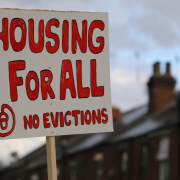
As the global climate faces significant changes in the immediate future, our adaptation to these new conditions must strategize prevention efforts that prioritize the health and safety of marginalized communities. Future regulations and policies can learn from this upstream approach to designing solutions. A world with less food waste is a world with fewer methane emissions; a world with working public transport is a world with fewer polluting cars; a world with more available, livable housing is a world with fewer children sleeping on our streets.
# # #
Author:
Michael Pesavento
Media Advocacy Specialist, IPS
Michael Pesavento is a Media Advocacy Specialist in the San Diego County office.